7000 Houston Rd STE 35, Florence, KY 41042

You brush twice a day. You floss. You rinse with mouthwash. So why does your dentist still find buildup at every cleaning? The answer comes down to tartar — and why brushing can’t remove tartar once it hardens. For Oakbrook residents asking this very question, Pearl Dental Care of Florence has the answers and the tools to help. Understanding this difference is one of the most important things you can do for your long-term oral health.
What Is Tartar and How Does It Form in Oakbrook Smiles?
Tartar starts as plaque — a soft, sticky film of bacteria. Plaque forms on your teeth every single day. When plaque is not removed within 24 to 72 hours, it begins to mineralize. Saliva introduces calcium and phosphate, which bind with the bacteria and harden the film into tartar, also called calculus.
Once tartar hardens, it bonds firmly to tooth enamel. It can also form beneath the gumline where brushing simply cannot reach. At that point, no amount of brushing or flossing will dislodge it. This is the critical distinction that many patients in Oakbrook do not realize until they experience gum problems or tooth sensitivity.
Common areas where tartar builds up fastest include:
- Behind the lower front teeth
- Along the gumline on upper back molars
- Between teeth where flossing was missed
- Below the gumline in periodontal pockets
Why Brushing Can’t Remove Tartar — The Science Behind It
Brushing is excellent at removing soft plaque. A good toothbrush disrupts bacteria colonies before they harden. But once mineralization occurs, tartar becomes as tough as bone. Standard toothbrush bristles cannot break that bond.
Even electric toothbrushes — while more effective than manual ones — cannot remove tartar. Whitening toothpastes marketed for tartar control slow new buildup slightly. They do not remove existing deposits. This is not a failure of your home care routine. It is simply biology.
The only tool capable of safely removing hardened tartar is a professional scaler used by a trained dental hygienist or dentist. At Pearl Dental Care of Florence, Dr. Stetson Earl and his team use both hand scalers and ultrasonic instruments. These tools vibrate or scrape calculus away without damaging enamel when used correctly.
What a Professional Cleaning Actually Removes That Home Care Cannot
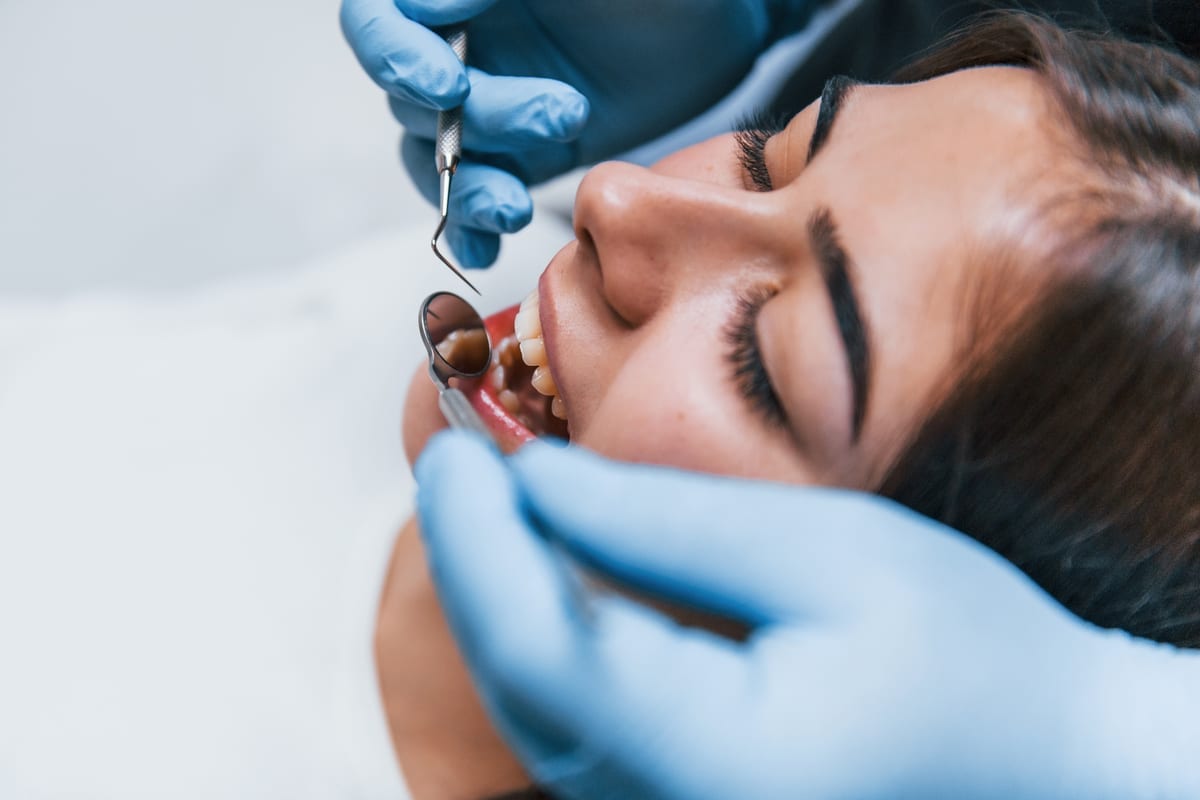
A professional teeth cleaning goes far beyond what your toothbrush can accomplish. During your visit at Pearl Dental Care, your hygienist removes three distinct types of buildup that home care leaves behind.
First, supragingival calculus is tartar above the gumline. It is visible as a yellowish or brownish crust. Second, subgingival calculus forms below the gumline inside periodontal pockets. This type is particularly dangerous because it feeds bacterial infections that destroy gum tissue. Third, surface stains from coffee, tea, and foods are polished away with a professional-grade prophy paste.
Here is a quick comparison of what each approach removes:
- Brushing: Removes soft plaque on tooth surfaces
- Flossing: Removes soft plaque between teeth
- Mouthwash: Reduces bacteria count temporarily
- Professional cleaning: Removes hardened tartar above and below the gumline, plus surface stains
The difference is dramatic. Many patients feel a smoothness to their teeth after a cleaning that they have never achieved at home. That smoothness also makes it harder for new plaque to attach and accumulate.
The Real Risks of Skipping Professional Cleanings for Oakbrook Patients
Tartar is not just a cosmetic issue. Left in place, it acts as a constant irritant to your gum tissue. The bacteria living inside tartar release toxins. Those toxins trigger inflammation, bleeding, and eventually gum disease.
Early gum disease — called gingivitis — is fully reversible with a professional cleaning and improved home care. But when tartar stays in place for months or years, gingivitis progresses to periodontitis. Periodontitis destroys the bone supporting your teeth. Tooth loss becomes a real risk at that stage.
Severe gum disease and deep infections can also lead to dental emergencies. Patients dealing with a painful abscess or swelling may need Emergency Dentistry Oakbrook services right away. In some cases, untreated infections spread deep into the tooth and require Root Canal Therapy Oakbrook to save the tooth entirely. Routine cleanings help prevent both of those outcomes.
Most adults should schedule a professional cleaning every six months. Patients with gum disease, a history of heavy tartar buildup, or certain medical conditions may benefit from cleanings every three to four months. Dr. Earl will recommend the right schedule for your individual needs.
How Pearl Dental Care of Florence Helps Oakbrook Patients Stay Ahead of Tartar
At Pearl Dental Care of Florence, every cleaning appointment is thorough and personalized. Dr. Stetson Earl and his hygiene team take time to assess each patient’s gum health before and after the cleaning. They measure periodontal pocket depths to detect early gum disease. They also check for signs of calculus in hard-to-see areas.
After removing all tartar deposits, the team polishes your teeth and applies a fluoride treatment. They also walk you through any areas where plaque is accumulating at home. This feedback helps you improve your brushing and flossing technique between visits.
Our team understands that dental visits can feel stressful for some patients. We keep the environment calm, explain each step, and check in throughout the appointment. Our goal is always education first — so you leave knowing exactly what happened and why it matters for your health.
Preventive care is the foundation of everything we offer, from cosmetic dentistry to periodontal care. Keeping your teeth clean and tartar-free protects every other investment you make in your smile. Book Now to schedule your appointment with our team.
Frequently Asked Questions
Can tartar ever go away on its own without a dentist?
No. Once plaque hardens into tartar, it cannot be removed by brushing, flossing, or any home remedy. Only professional dental instruments can safely break the bond between tartar and tooth enamel. The longer tartar stays in place, the more damage it can cause to your gums and bone.
How long does it take for plaque to turn into tartar?
Plaque can begin to mineralize and harden into tartar in as little as 24 to 72 hours. This is why daily brushing and flossing are so important. Once tartar forms, you cannot reverse the process at home — a dental hygienist must remove it.
Is tartar removal painful?
Most patients experience little to no discomfort during a routine cleaning. If you have significant tartar buildup below the gumline or sensitive gums, there may be some mild sensitivity. Your hygienist can adjust their technique and offer numbing options if needed to keep you comfortable throughout the visit.
How can I slow down tartar buildup between cleanings?
Brush at least twice daily using a soft-bristled toothbrush and fluoride toothpaste. Floss every day to remove plaque from between teeth. Staying hydrated and limiting sugary foods also helps reduce plaque formation. These habits slow tartar development but cannot replace professional cleanings.
How often should Oakbrook patients get a professional teeth cleaning?
Most adults benefit from a professional cleaning every six months. If you have gum disease, a history of heavy tartar buildup, or certain health conditions like diabetes, Dr. Earl may recommend more frequent visits — typically every three to four months. Your cleaning schedule is always tailored to your specific oral health needs.