7000 Houston Rd STE 35, Florence, KY 41042


It is very important to have good oral hygiene in children. Flossing is one way to help maintain children’s dental health. You, as a parent, know how important it is for your child to start the flossing habit, but how do you make it easy? In case you are a bit nervous to start flossing or are confused about what tools to use, do not worry; you are not alone. In this blog, we will share all the tips and tricks to help your child floss properly at any age.
Here at Pearl Dental Care in Florence, KY, we completely understand how challenging it can be for parents to help their children develop good oral hygiene habits. Well, flossing need not be tough or complicated at all. We will outline the process for your child’s specific age and age group, introduce you to some of the easiest flossing tools, and discuss common mistakes to avoid. Keep reading for clean and cavity-free teeth with ease.
Why Is Flossing Important For Your Children?
We all have heard that brushing is very important, but let us not forget about flossing, too. It cleans the areas between your teeth that your toothbrush cannot reach. For your children, it helps prevent cavities, gum disease, and bad breath, keeping their teeth bright throughout their lives. Flossing also sets up a lifelong good habit, and children will love having fresh, sparkly mouths without the pain of gingivitis later.
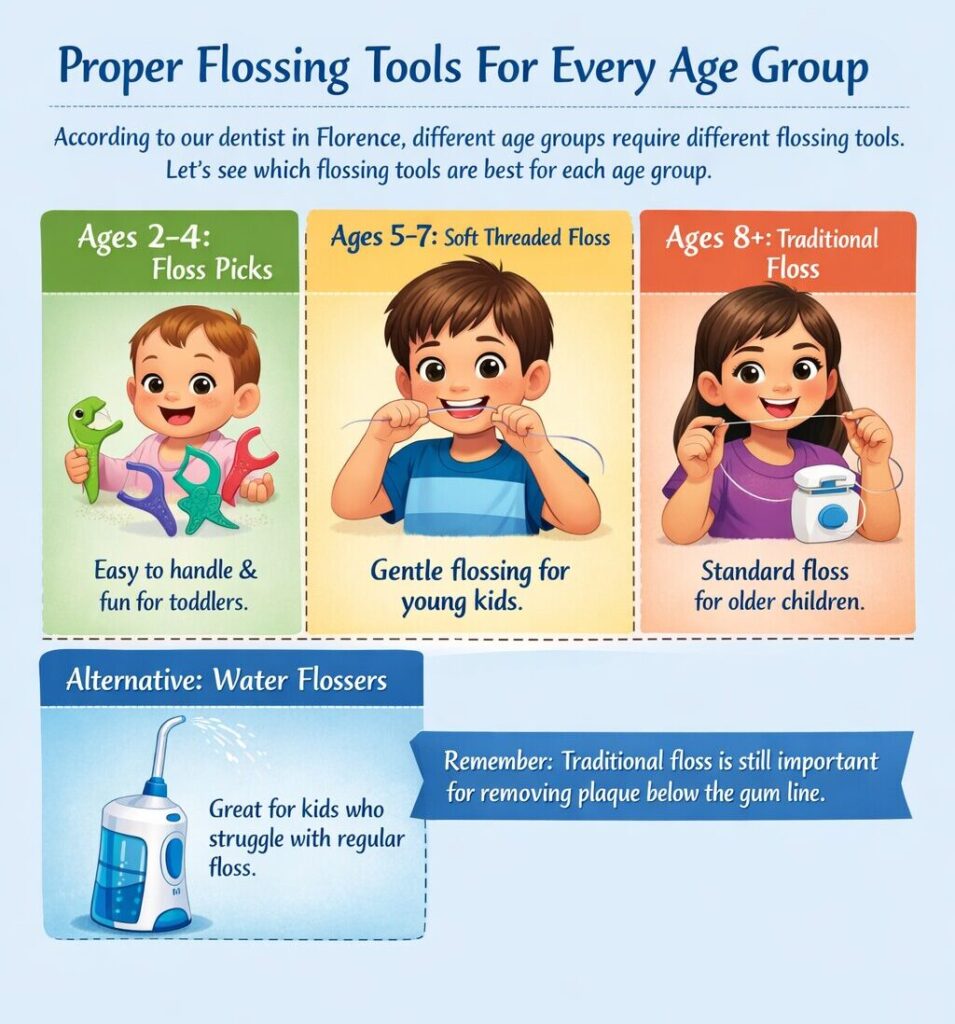
Proper Flossing Tools For Every Age Group
According to our dentist Florence, Flossing is not only about the method but also about the tools used. Different age groups require different tools. Let’s see which flossing tools are best for each age group.
Ages 2-4: Floss Picks
For toddlers, this type of flossing tool can make their little hands get comfortable with the concept. It is also easier to handle and less harmful than traditional floss. Some floss picks also come in a variety of designs, making them more engaging for young children. The sole focus here is to help your toddler become accustomed to flossing and understand its importance.
Ages 5-7: Soft Threaded Floss
As children grow older, soft-threaded floss can help them better understand how to floss. This type of floss might be slightly tricky to use, but it is still quite effective for their gums. Try to teach them how to gently run the floss between their teeth, and also help them learn the proper way to do so. At this age, they can do it without parental supervision, and their fingers can easily maneuver around the gum line.
Ages 8+: Traditional Floss
At 8 years old, your child should be able to use traditional dental floss. This can still be tricky to work around, however. Try showing them the method with your own fingers and guiding their hands as you go. Ensure they use the appropriate thickness of floss. You can also find a range of flavored options to enhance the experience for children.
Alternative: Water Flossers
If your child dislikes or is unable to floss with traditional floss, a water flosser is what you need. It uses a fine jet of water to clean the spaces between the teeth. It is extremely effective and also gentler than string floss. However, it should not replace flossing altogether, as traditional floss is effective in removing plaque from below the gum line.
Common Mistakes and How to Avoid Them
Flossing can be a bit challenging to get the hang of initially, and kids (and parents alike) make mistakes. The following are a few things you should keep in mind to make sure your child is flossing correctly:
Missing the Back Molars:
These back molars are the hardest to reach and the most susceptible to cavities. Ensure your child doesn’t miss these important areas when flossing.
Using Excessive Force When Flossing:
With children just beginning to use a technique, it’s easy to use too much force. Make sure you show your child how to glide the floss gently up and down in between their teeth without cutting into their gumline. Too much force can damage the gums.
Not Using Enough Floss:
Many children use far too little floss when cleaning between their teeth. You should give your child 18 inches of floss and instruct them to wrap each finger with a portion of the floss, leaving enough space to move the floss between teeth.
Skipping Flossing Altogether:
Your child should make a conscious effort to include flossing in their daily hygiene routine. When kids skip it because it’s difficult or takes a little too much time, plaque will start to build up. Encourage your child to do this twice daily, after each meal, or before brushing their teeth in the morning and before going to bed.
Not Getting Proper Supervision
While older children should gradually be able to floss on their own, they may still need your supervision until they have mastered the correct technique. As they become more comfortable, you can begin to step back and supervise to ensure they are effectively flossing their teeth and keeping their mouths clean and free of disease.
Source: Teeth Talk Girl
Conclusion: The Road to a Healthy Smile Begins with Basic Care
Flossing for your child does not have to be challenging or an overwhelming. Using the right tools, making the experience enjoyable, and working hard to avoid the above-mentioned mistakes will help pave the way for a lifetime of healthy teeth and gums. And as always, it’s imperative to make regular checkups with a dentist in Florence to keep their oral health on track.
To learn more about establishing good oral hygiene habits for your child, or to find out if it’s time to schedule an appointment for a family checkup, contact Pearl Dental Care of Florence. We are committed to providing your family with quality oral healthcare with gentle hands.
Common Questions People Have
At what age should kids start flossing?
Kids should begin flossing once two teeth touch, typically around age 2 or 3. It’s essential to start early to establish a routine that becomes part of their daily oral hygiene.
What is the best tool for flossing for young children?
Floss picks are ideal for young children, as they are easier to hold and navigate. They also make flossing less intimidating for kids.
How can I get my child to floss regularly?
To make flossing fun, try using flavored floss or floss picks with fun handles. You can also turn it into a routine and reward your child for sticking with it.
Can a water flosser replace traditional flossing for kids?
A water flosser can be a helpful addition to traditional flossing, but it shouldn’t replace it entirely. It’s an excellent way to help kids clean hard-to-reach areas.